
 |
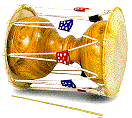
Changgu
The Changgu is the fundamental instrument in Korean traditional classic
music.
The originally-named Puk was used to accompany vocal music such as P'ansori. |
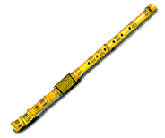 |
Taegum
The Taegum is a transverse bamboo flute. A major solo wind instrument, it
has been played in almost all types of music since the Shilla
Dynasty(57B.C.-668A.C.). |
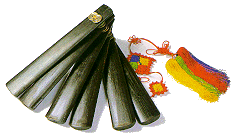 |
Pak(Clappers)
The Pak is a set of six wooden slabs shaped like a folding fan, loosely tied
together at one end by a thong made of deerskin. |
| Kwenggwari(Small Gong)
In the farmers' festival music, the lead player(Sang-soe) of this small gong
produces tones that are both loud and high in register while the sounds that
emanate from the second small gong player are softer by comparison. |
|
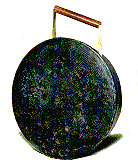 |
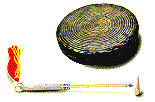
Ching(Large Gong) The Ching is struck with a mallet, the tip of which is wrapped in cloth or deerskin. It is held in the left hand by a gandle suspended by a cord running through two holes at the top and struck with the right hand. |
|
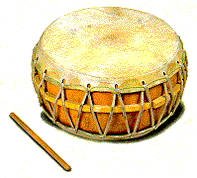
Puk
In the past, the Puk, known to be the oldest folk instrument, was used to
accompany all genres of Korean music. |
 |
|
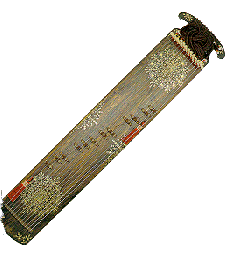
Kayagum
The Kayagum is a 12-stringed plucked zither with movable bridges and the
most preferred and representative of all Korean string instruments. |
 |
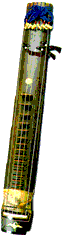 |
Kimungo(Six-stringed Instrument)
|
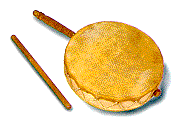 |
Sogo(Handle Drum)
A small drum with a handle, the Sogo is played with a small stick. |
Saenap(Taepyungso)
Samul Nori(Four instruments play)
| Four percussive instruments of farmer's festival music Kkwenggwari(small gong), Ching(large gong), Puk(drum), and the Changgu(hourglass drum) were brought indoors to create a new gener of music that organized various rhythmic gestures into music the Samul Nori. | 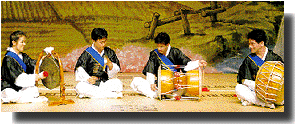 |
|
Cultural Legacy Korean old palaces and museums Korean Traditional Culture |
 |
Shopping in Korea Korean Streets Memo |
e-mail exit@nextel.net
Designed By EXIT SYSTEM